
Text by Pamela McCourt Francescone Photos Pamela McCourt Francescone and Archive
“If you reject the food, ignore the customs, fear the religion and avoid the people, you might better stay at home.” — James Michener
Every journey ends, as it begins, in the mind. And the more limpid minds, those that deflect the contaminating prejudices of others, can best fathom the intimate and recondite sensations of the places they visit. Also because, once back home – in a flurry of colours, shadows, broken words, fragrances, glances and emotions –these minds are gripped by an overwhelming desire to unravel the intricacies of their travels. A desire that can reach almost uncontrollable levels when it is fanned by reading about where they have been and delving deeper into its depths. In the case of Nicaragua this means throwing open a glittering treasure-trove that overflows with the immense wonder of the journey, profound emotions and a profusion of memories and impressions just waiting to be sifted through that most awesome of filters, the human mind.

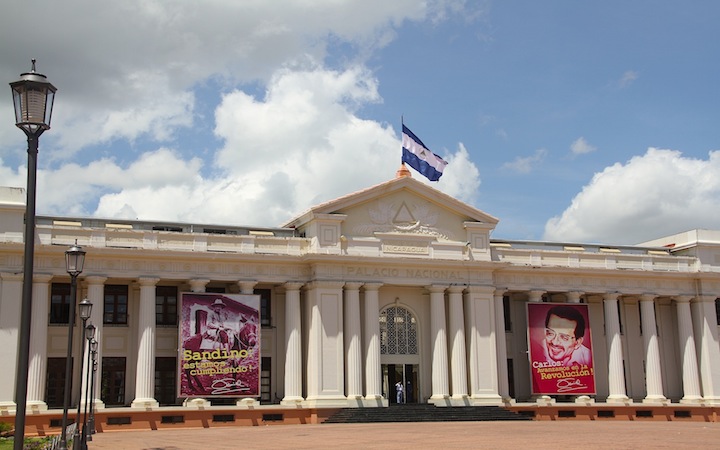
It would be lacking in tact not to start with Managua, which was razed to the ground by a devastating earthquake in 1972, and could be regarded as a city without a soul. But of course Managua has a soul, and it is to be found in its courageous pride in being the capital city, with almost one fifth of the country’s population, its institutions and that heart-breaking skeleton which was once the cathedral and stands next to the majestic Palacio Nacional de la Cultura, where humongous Sandinist posters break the symmetry of the soaring white Greek-Roman columns on the façade. While many of the old districts were only partially rebuilt after the earthquake, all around them smart new residential, business and commercial areas are springing up with elegant international hotels and modern shopping malls.

It only takes half an hour to find yourself climbing a road through cold grey lava fields to confront one of the prehistoric monsters with which Nicaragua has always had to contend: its 48 volcanoes of which seven are active. Presences which, down the millennia, have never softened their stranglehold on the country, regularly and without notice brutally and cruelly changing its features. Here we have reached the Masays volcano, an enormous crater from which billowing clouds of acrid grey sulphurous clouds threateningly spill out, as if to remind us that here, even on the outskirts of the capital, nature always has the upper hand. And what nature! Rain forests and mountainous areas, lakes and rivers, jungles and coastal plains, charming colonial towns and archaeological sites, places which bear witness to the country’s long and tormented history and waters which go from crystal clear – on the Caribbean coast – to the deepest shades of the Pacific.

Leaving Masaya’s malevolent gaseous clouds behind us we come to the enchanted island of Ometepe on the placid waters of Lake Nicaragua where we find two more volcanoes, Maderas and Concepción – which has such a picture-perfect cone one can’t help thinking there has to be a divine Michelangelo – from which the island gets its name as it means “two hills” in native Náhuatl. Removed from the outside world, in a cocoon of myths, petroglyphs and monumental pre-Columbian statues, on Ometepe it is easy to be carried away by legends like that of the Charco Verde lagoon with its emerald-green waters which was once the city of El Encanto where Chico Largo, a descendent of ancient sorcerers transformed anyone who dared hunt there into cows, pigs and caimans. There is a much more cheerful atmosphere on Ometepe’s beaches many of which have splendid views of Concepción which likes to sport a little beret of snowy white cloud at a jaunty angle. Anyone of a sporting nature will want to roam the island on horseback or bicycle, or enjoy languid walks in the halcyon countryside which betimes recalls the great paintings of the Impressionist masters. And for those who want to experience the island’s gastronomy – the lake fish are delicious – there is Villa Paraiso, right on Santo Domingo Beach.
Moving on to the Atlantic coast and the San Juan river which, from Lake Nicaragua spills into the Caribbean and is the naturel border with Costa Rica, we find ourselves in the most extensive rain forest in Central American and the Indio Maiz Biological Reserve. Unbounded spaces and an exuberant and extraordinary biodiversity with jaguars and pumas, monkeys and tapirs, crocodiles and turtles, toucans and iguanas roaming freely, this is also a privileged spot for watching the migrating birds that ply their way back and forth between the two Americas.

For those who want to delight in this splendid and spectacular natural environment there are two points of reference. One is San Juan de Nicaragua (formerly San Juan del Norte and, during the years Nicaragua was a possession of the British crown, Greytown), a friendly town with two thousand inhabitants and a new airport where small planes can land. And the other, the area’s only authorized hotel, the Rio Indio Lodge which is welcoming, comfortable and has a great chef. At night the rooms, which are spacious and linked to the lodge by raised wooden walkways through the forest, ring with the calls and songs of the jungle. And the flora and fauna of the river, the lagoon and the ocean are all within easy reach of the lodge from which land excursions with expert guides are organized. The more active will enjoy the survival courses in the Bushmaster Survival School in this tranquil refuge which is a legend with fishermen.
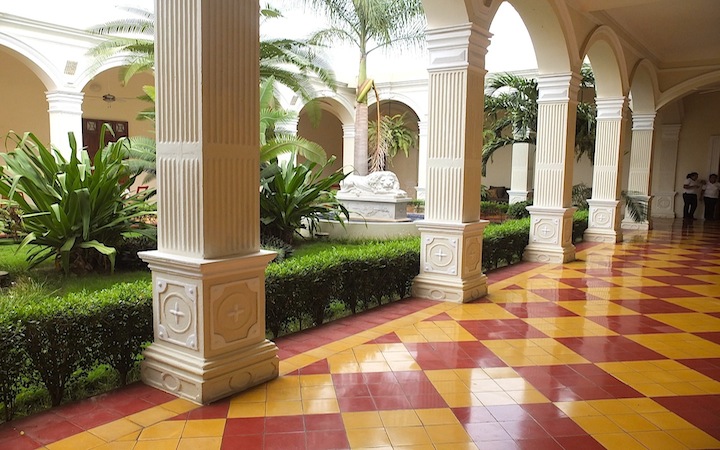
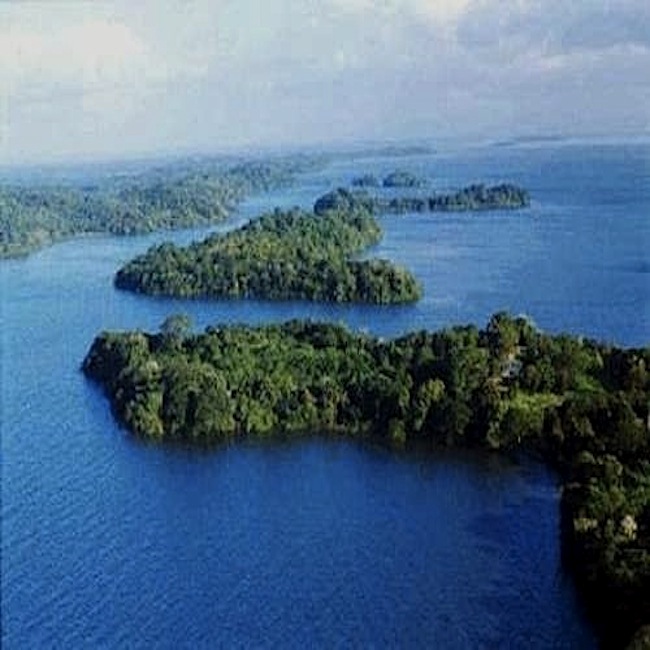
Granada and Leon, Nicaragua’s two colonial gems. Granada is the country’s most popular tourist spot and ideally located for anyone who wants to move between one coast and the other. It is a cheerful city on Lake Cocibolca, under the watchful eye of the Mombacho volcano which, many millennia ago created Las Isletas, the archipelago of 365 little islands, some of which are private while others, like Zapatera, are repositories of pre-Columbian traces and easily reached on the little speed boats that line up along the malecón. A sunset stroll along Granada’s narrow streets, passing the elegant low colonial houses with their tiled roofs and shaded internal patios, restores the soul, while those looking for the city’s night life will find Granada’s movida in the little restaurants and bars on the Calle La Calzada not far from the historical Hotel Dario, named after Nicaragua’s national poet, Rubén Dario.
Visit Leon, the country’s second soul, to get the heartbeat of Nicaragua’s history and culture. Founded in 1524 by the Spanish, it was destroyed in 1610 by yet another volcano, Momotombo, which cancelled all traces of the old settlement which was about 40 kilometres from today’s Leon. Although there is little to see on the archaeological site of Leon Viejo, which is a UNESCO World Heritage site, it is worth a visit to caress the old stones. Leon, another UNESCO site, has Central America’s largest cathedral, the Ascunción, with five naves and the tomb of Rubén Dario which has made it a place of pilgrimage for the entire country. Across from the cathedral square the murals of the martyrs of the ‘70s civil war are a stark reminder of what this country has lived through, and it is difficult not to be moved by the yellowing newspapers and photographs in the little Museum of the Revolution, yet another reminder of the darkest years of Nicaragua’s modern history.
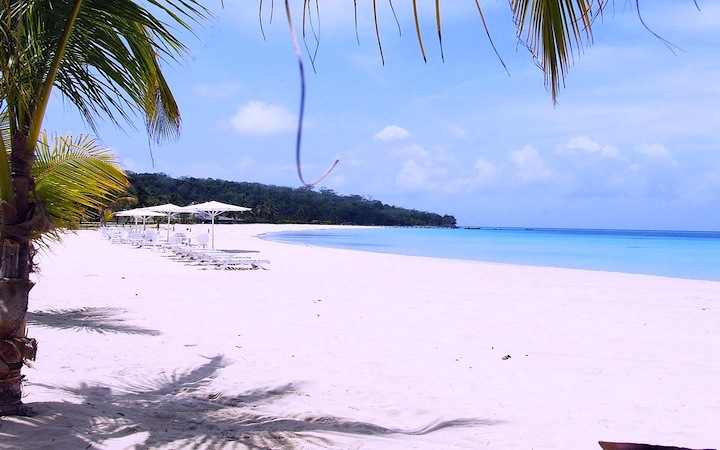
Big Corn Island is just a 90-minute flight from Managua, a paradise lost where the sea fades from turquoise to milky green to baby blue, conjuring up dreams of becoming a modern-day Robinson Crusoe. The welcome in the Arenas Beach Hotel, and the delicious lobster tossed with white wine and coconut milk, are on a par with any luxury five-star. And, lazing on an elegant white beach sofa under a gazebo, in your daydreams you see your ticket home being snatched away by the playful trade winds as they whisper sweet nothings, ruffling the fronds of the soaring palms which bow graciously to caress the crystal-clear waters that lap up to the silky sands.

Box: Blue Panorama Airlines operates flights every Wednesday from Rome Fiumicino to Managua via Havana, with non-stop return flights to Rome.